Kim Soo Hyun

Welcome to my precious blog, hope it helps you finding out something new!!

Lee Min Ho

Welcome to my precious blog, hope it helps you finding out something new!!

Jung Yong Hwa

Welcome to my precious blog, hope it helps you finding out something new!!

Mario Maurer

Welcome to my precious blog, hope it helps you finding out something new!!

h

Kim Woo Bin

Welcome to my precious blog, hope it helps you finding out something new!!

Tampilkan postingan dengan label Daily Tasks in Japan :). Tampilkan semua postingan

Jumat, 06 Februari 2015

Japanese Culture - Report 3 (Nukui Shrine)


Tety Maryenti
Japanese Culture Report
Nukui Shrine


Nukui shrine is a famous shrine near Koganei. This shrine is close to Buddhist temple. Even though it’s close, but the shrine is more popular than Buddhist temple,  since Japanese people believe in Shinto’s Faith, on the other hand, Buddhist is minority religion in Japan, so perhaps, that’s the reason why the shrine is bigger than temple. When i was entering the house of noble family, i saw a beautiful garden there. There was a big tree, which leaves will be turned into red-golden colour as autumn season coming. I also found a monument of that house, it was written by Kanji so i couldn’t read it, but my friend from China  told me the meaning of the monument, which means the owner wanted to protect the forest for his wife. The forest was dedicated specially for his wife. I thought it was so heart-touching story.
After that, we visited the shrine. Nukui Shrine has two different entrances, the easy one is for women, and another  is for men which has many stairs, showing that men are stronger than women. There was a big grey gate. I love that Shinto’s gate, because the shape was so beautiful and it had sturdy looking, like no one can destroy it. I have seen the other Shinto’s gate in Mitake Mountain Shrine,colored in red. I don’t know why the color of the gate is different. Besides, there was a big pond  which many of big ‘koi’ fishes swimming inside it. Koi Fish is symbolized as a good luck.
If we want to pray, we have to throw money to the big-wooden box in front of the shrine then rings the bell by pulling the bell-rope, then bow twice, clap hands twice and bow once for finishing praying. On the other side of the big shrine, there was a small shrine, which gate was colored in red. The gate was so small like the shrine and i was so interested with this shrine. I saw 6 foxes sitting on the box inside the shrine. They were so cute. These foxes symbolized richness. They will pursue your dream. Another thing was dog creature statue. According to the story, this dog always protects the shrine from the demon.  I think i know why dog was choosen as a guard, because its loyalty and its bravery to save people around itself. Then, we went to the upstair side of shrine. There was a branch shrine, used for simplifying visitors to pray and we can see Fuji mountain from there. I found Buddhist statues there. These status are believed as protectors for kids and foreigners who visit the shrine. I was so happy being there, and it was really fascinating history. 
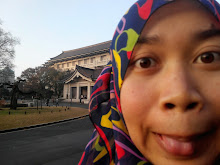
Taken at Nuki Shrine :) with Guan from China XD

Japanese Culture - Report 2 (Strange Food In Japan)


Tety Maryenti
14998003
Kake Gohan
Tamago kake gohan is a dish in which a raw egg is put on top of or mixed with rice. When it is served, beaten eggs are sometimes used, as are non-beaten, but sometimes people only use the yolk of the egg. The dish is known in Japan as "tamago kake gohan" (gohan means rice or food and kake means "splashed" or "dashed”. When i knew the name of the dish, I was really amazed with its unique name. Raw splashed/dashed egg used on the top of rice? It is really uncommon way for serving dish, yet people in Japan are considered this raw egg as a delicious meal. I knew that Japanese love eating raw fish, but i have never wondered before, they also like eating  raw egg.
Well, Kake Gohan before it is known as a favorite dish in Japan, it had interesting history, since ancient times the main meat consumed by the Japanese people has been fish, because of the Buddhist commandment against killing animals. In Shintoism, the egg is regarded as an offering to the Gods, and people believed that they would be punished if they ate eggs. During the Edo Period (1603-1868), people began keeping chickens as pets.  Shortly after, eggs began to become a regular part of some diets because people quickly came to realize that unfertilized eggs didn’t hatch. One result of this new knowledge was that they could stop considering an egg as a creature under heaven. Eventually people lost the belief of eating an egg was a sin. Ginko Kishida was the one who invented this unique food during Meiji Era (1868-1912). He was amazed at how tasty it was and recommended it to everyone he knew. Then, Tamago Kake Gohan became very popular.
After reading the story of Kake Gohan, I intended to make this simple meal, so i tried to find the recipe. First, I need to dig a hollow in the center of the cooked rice in the rice bowl using chopsticks and then pour the egg/soy sauce mixture into the hollow, stir the mixture into the rice, and finally the rice becomes a golden color. It is the easiest way i think for making a healthy food without cooking. When i wanted to try the taste, i was really doubtful. I have never imagined that i am gonna eat raw egg. Surprisingly, the taste wasn’t bad as i thought before. It was just like a fried rice, but since people in my country usually cook everything before eating, so my tongue was rejecting to finish it all, somehow I felt disgusted to swallow it. However I was very happy, that i could make and try it once in my life.


Japanese Culture - Report 1 “Farmhouse of the Tenmyo Family”

Tety Maryenti
14998003

“Farmhouse of the Tenmyo Family”
The Edo-Tokyo Open-Air Architectural Museum is a great place to see in Tokyo. There are so many buildings which have historical value and exhibit the real-sense of life was during the earlier times. However, one of the most favorite building for me was Farmhouse of Tenmyo Family. When entering the entrance gate of this building, I was fascinated by the sound of squeaking floor when I stepped on the floor. The building was old, but it looked very sturdy. I was also surprised when entering the room, because the room was filled with smoke. The smoke had a characteristic odor, which did not hurt the eyes, but I was thinking, whether residents will be healthy or not if everyday inhaling the smell of smoke. I think it is not good for their health, because it can interfere their respiratory tract.
Another interesting thing that concerns me a lot was a fish hook which is believed as a protector from fire hazard because the fish is creature living in the water.Then I walked to the window where I could see the sun shining on the edge of the house. The house had a beautiful garden and  had neatly stacked stone path.  I felt really cozy and comfortable because of  the warm of sun shining, nice weather and beautiful green foliage which were able to refresh my mind and making me wanted to stay longer.      
For the living room of this house, there was a fairly large round table which were surrounded by cushions made from straw. It was tremendously beautiful. Then, I climbed the stairs to see the second floor. There was unique air vent which dragon carved so accurately.  I was wondering how skilfully they were in ancient time since they could make very interesting art during the period, and the last thing that concerns me was tatami which had simple motive. It made  the house looked comfortable, warm and elegant which could make the occupants comfortable to live.
In brief, I was so amazed by the beauty of Japanese houses in that era. There were so many houses which constructed beautifully and accurately. Those really symbolize how nice Japanese appreciate the power of art and how good they manage it through the time. And now I can understand the feeling insight. 

Taken at Edo Tatemono En hehehhe